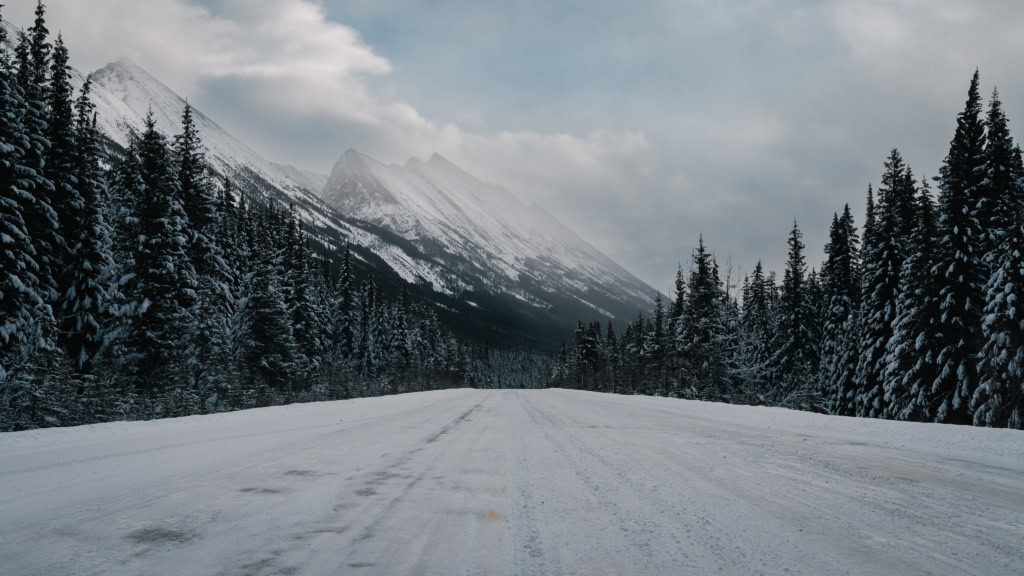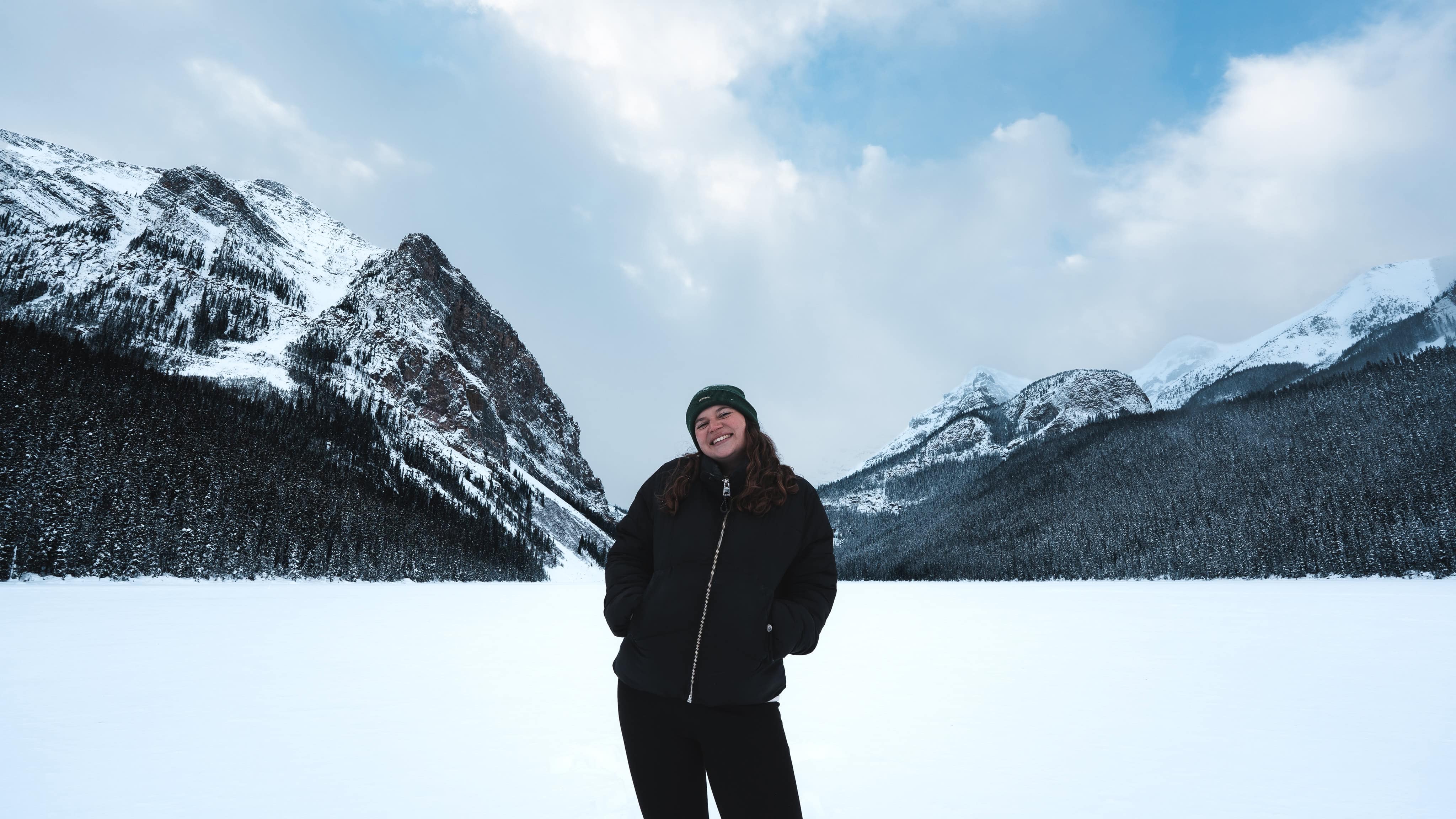
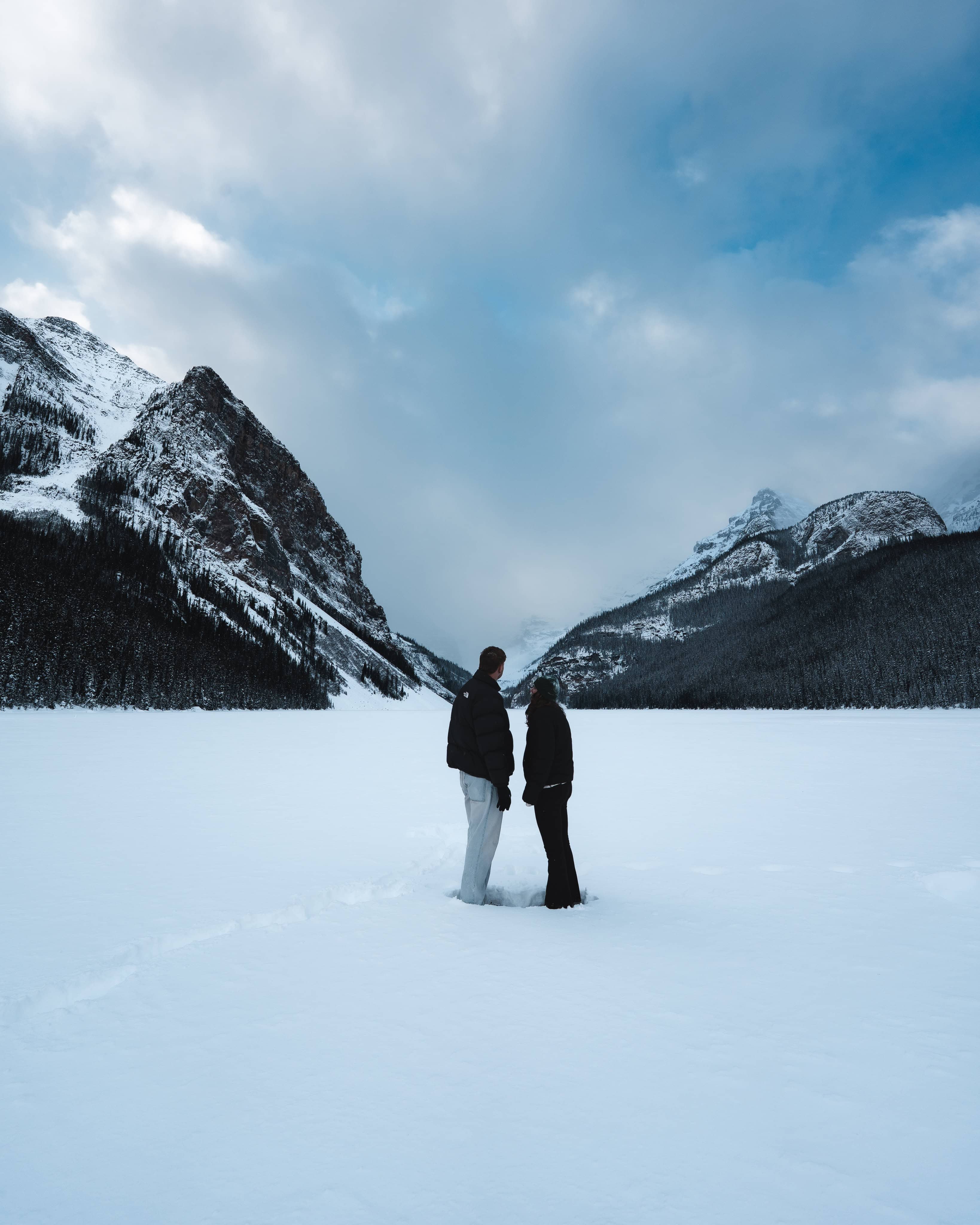
When winter transforms the Canadian Rockies into a snow-covered, enchanting fairy-tale landscape, the magic of Lake Louise is revealed. This world-famous glacial lake is one of North America’s most spectacular winter destinations! Visitors are delighted by its breathtaking combination of alpine wilderness, frozen ice and monumental mountain panoramas. During the winter months, Lake Louise reveals a unique side to itself – it is so tranquil and almost surreal that you feel as though you are in another world.
Location and geographical features
Lake Louise liegt im Herzen des Banff-Nationalparks in der kanadischen Provinz Alberta und gehört zu den bekanntesten Naturwundern der Rocky Mountains. Der auf etwa 1.750 Metern Höhe im Bow Valley gelegene Gletschersee ist von einer eindrucksvollen alpinen Kulisse umgeben. Dominiert wird die Szenerie vom Victoria-Gletscher, dem Mount Victoria, dem Mount Lefroy und dem Mount Temple. Im Winter verwandelt sich die Landschaft rund um den See in eine nahezu monochrome Welt aus Weiß, Eisblau und Felsgrau. Aufgrund der hohen Lage und des alpinen Klimas ist der See mehrere Monate im Jahr vollständig zugefroren, was viele der typischen Winteraktivitäten erst ermöglicht.
History of Lake Louise
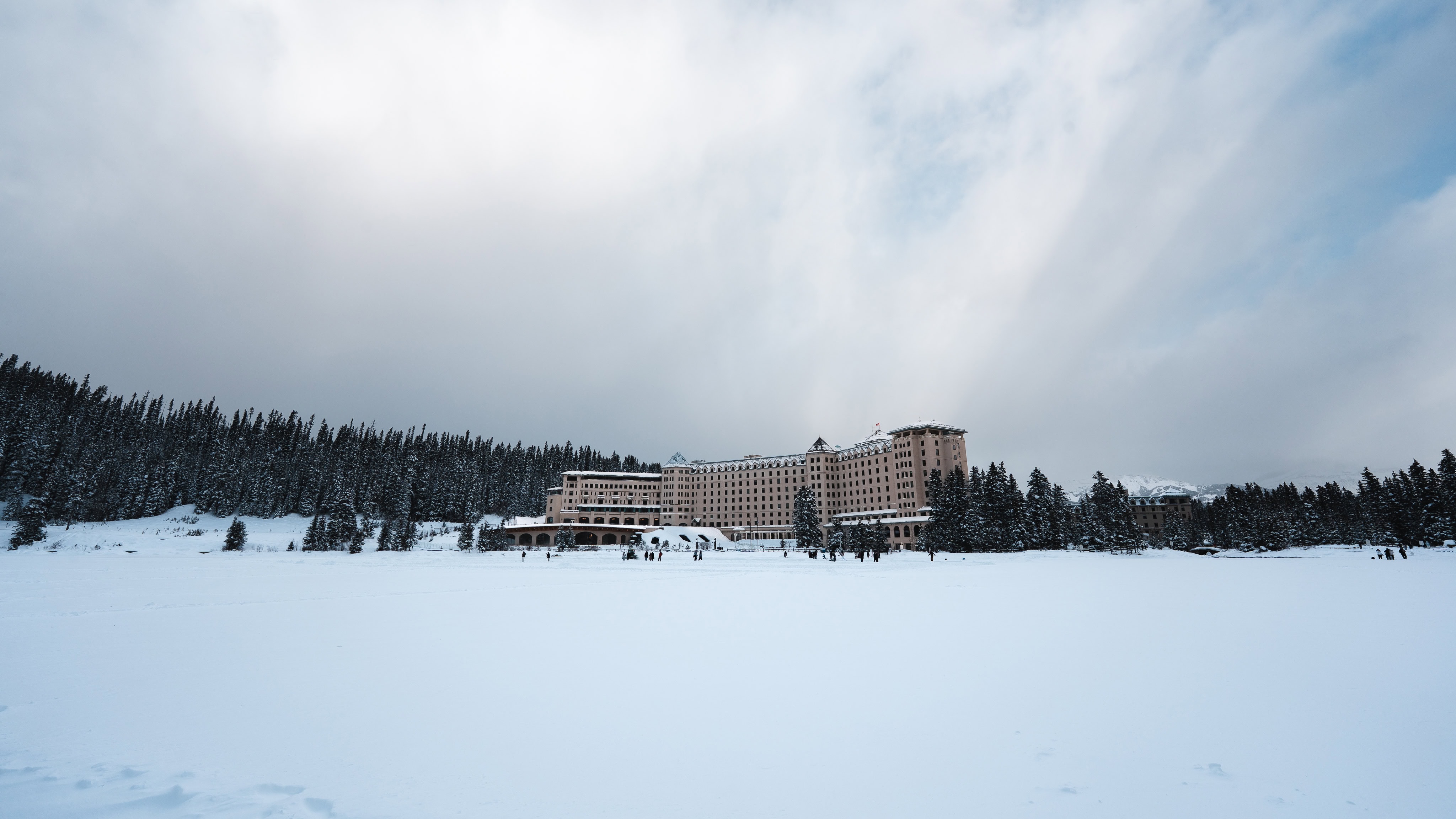
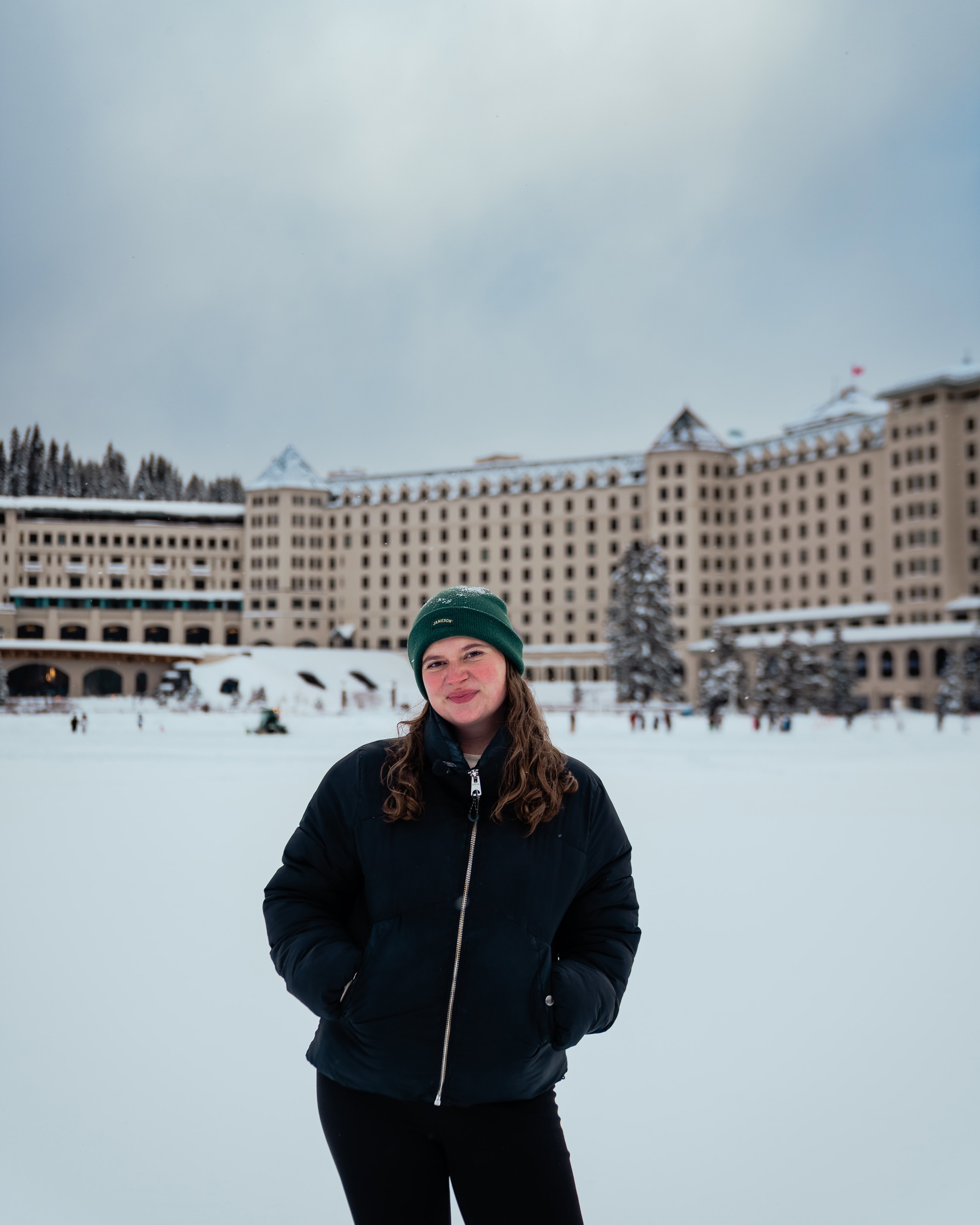
The lake was originally discovered in 1882 by the explorer Tom Wilson, who named it ‘Emerald Lake’ because of its emerald green colour. Two years later, it was renamed Lake Louise in honour of Princess Louise Caroline Alberta, the wife of the Governor General of Canada at the time. Following the construction of the Canadian Pacific Railway, the region quickly gained importance, with Lake Louise developing into a popular destination for travellers, mountaineers and nature lovers. The world-famous Fairmont Chateau Lake Louise, which still dominates the landscape today, was built at the beginning of the 20th century. Even in winter, it offers a luxurious retreat amidst the snow-covered mountains.
Winter climate and best time to travel
Winter in Lake Louise is long, cold and snowy. Temperatures typically range from -10 to -20°C, though they can plummet much lower during cold spells. The lake usually freezes completely in early winter and remains covered by a thick layer of ice until late spring. These climatic conditions make Lake Louise one of the most popular winter destinations in Canada. The clear, dry air often provides bright blue skies which contrast sharply with the white landscape.
Lake Louise in winter: activities on and around the lake
An absolute highlight is ice skating on the frozen lake. The lake is regularly prepared to offer one of the most spectacular natural ice surfaces in the world, providing views of glaciers and snow-capped peaks. Winter hikes along the lakeshore and snowshoe tours through the surrounding forests and valleys are also very popular. There are several well-marked trails that start right at the lake, which are also suitable for less experienced winter hikers.
Cross-country skiers will find excellently groomed trails around Lake Louise suitable for both classic and skating styles. Just a few minutes away is the Lake Louise Ski Resort, which is one of the largest ski areas in North America. The region is particularly attractive for winter sports enthusiasts thanks to its guaranteed snow, varied slopes and spectacular views.
Nature and wildlife in winter
Even in winter, Lake Louise remains an important habitat for a variety of animal species. If you’re lucky, you might catch a glimpse of moose, snowshoe hares or bighorn sheep in the surrounding area. The ecosystem also includes predators such as wolves and lynxes, although they are rarely sighted. Visitors should always be aware that they are in a national park and take appropriate precautions, especially when hiking in winter away from popular trails.
Significance for Banff National Park
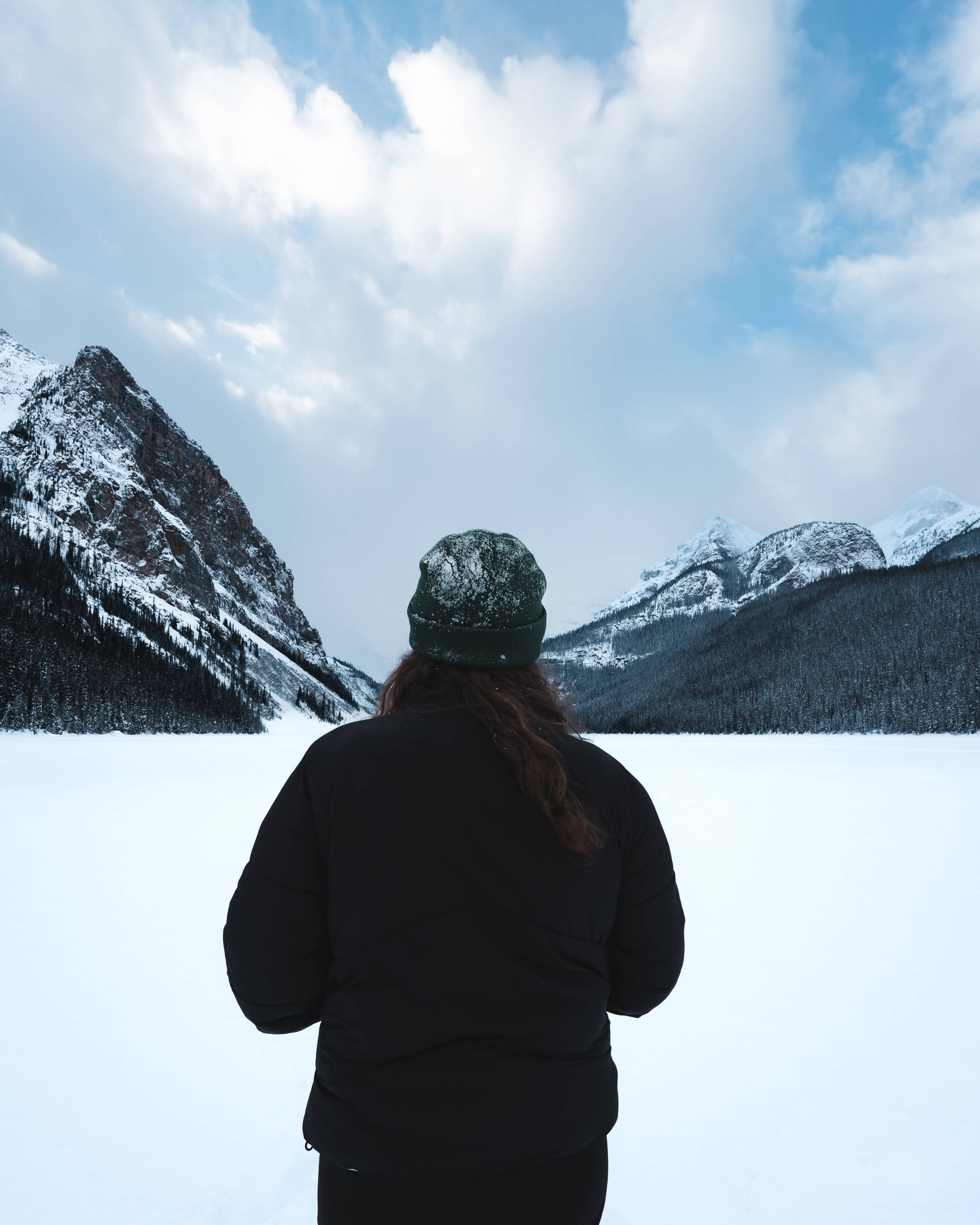
Lake Louise is not only one of Canada’s most famous photographic subjects, but also a key symbol of the protection of the alpine landscapes in Banff National Park, the country’s oldest national park. Winter in particular demonstrates the sensitivity of this ecosystem. The park administration therefore focuses on sustainable tourism, regulated visitor flows and nature conservation. Many areas are deliberately restricted to minimise avalanche risks and protect the environment.
Getting there and infrastructure in winter
Lake Louise is easily accessible in winter, too. The town is located directly on the Trans-Canada Highway between Banff and Jasper. Parking facilities are available, but are heavily regulated due to high visitor numbers, especially during the winter season. Alternatively, shuttle services are available to help reduce the environmental impact and facilitate access to the lake. Despite its remote location, the infrastructure around Lake Louise is highly developed, offering high-quality accommodation, restaurants, and winter sports facilities.
Lake Louise uniquely combines spectacular natural beauty, alpine history and a wide range of outdoor activities. Its frozen glacial lakes, snow-capped mountains and clear winter air make it one of Canada’s most impressive winter destinations. Lake Louise offers an extraordinary backdrop of tranquillity, vastness and impressive beauty for nature lovers, photographers and winter sports enthusiasts.